
by Mark Murton and Linda Kay
Directed by: Raúl Ruiz
Synopsis: A profile of Austrian artist Gustav Klimt (John Malkovich), whose prolific and sexual paintings symbolized the art nouveau style of the late 19th and early 20th century, told as a series of flashbacks as Klimt lies on his death bed.
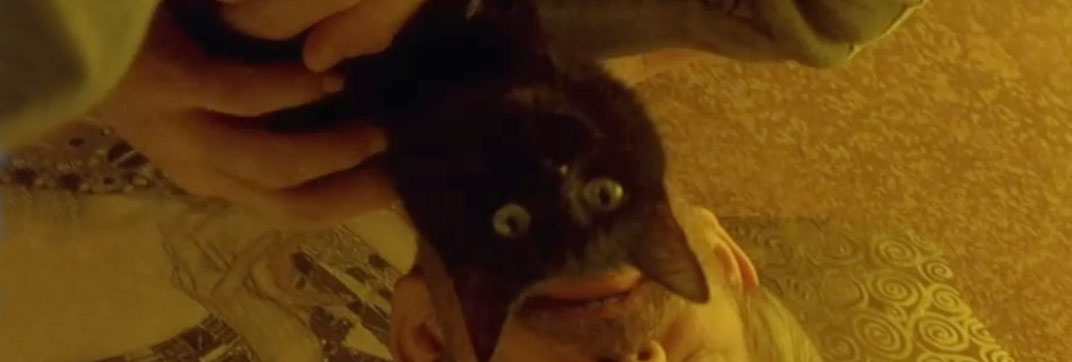
Cat Burglar (Scene Stealer): The first cat scene comes when a black cat is running across sheets of paper featuring Klimt’s sketches strewn across the floor of his studio where he is entertaining Midi (Veronica Ferres).
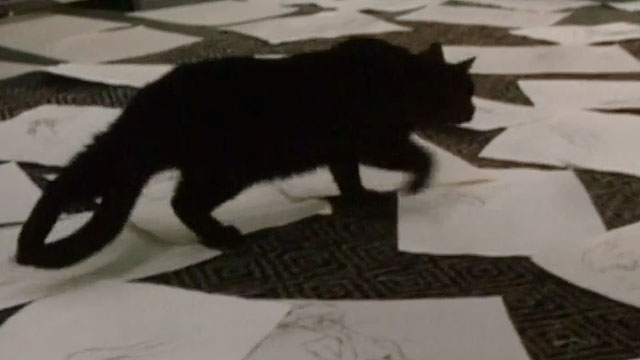
They are soon joined by Serena (Sandra Ceccarelli) who, to a chorus of cries from unseen cats, tells Midi of the importance of cats to Klimt’s work and how, “He lets his cats piss on his works; he claims that cat’s piss is the best fixative.” During this conversation, Klimt picks up and cuddles the black cat. This scene was cut from the shortened version of the film which is a shame since it sets up Klimt’s relationship with kitties.
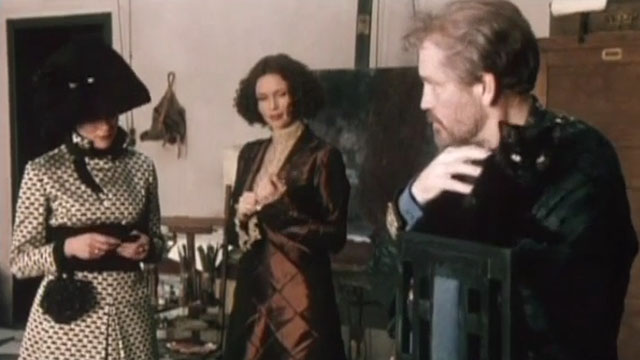
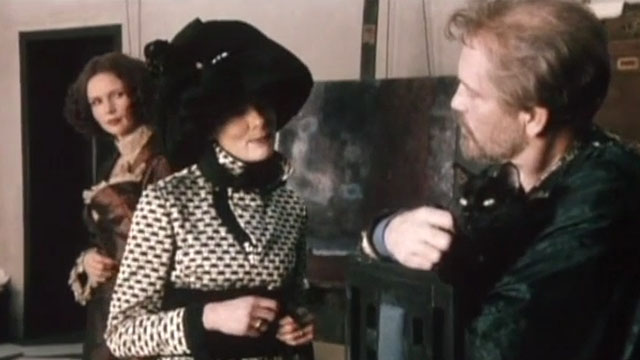
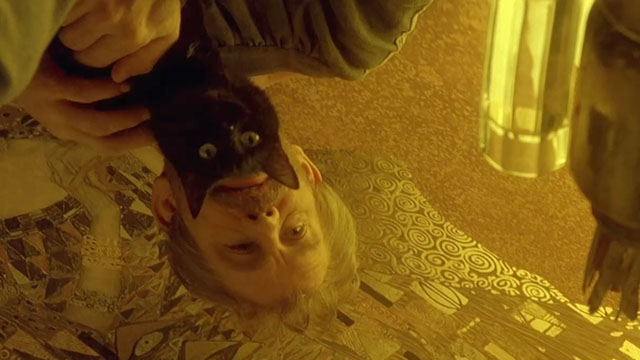
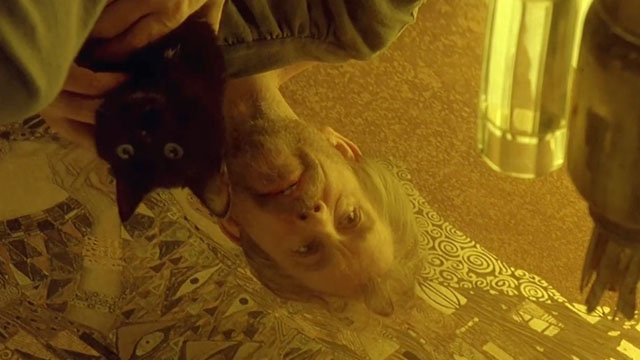
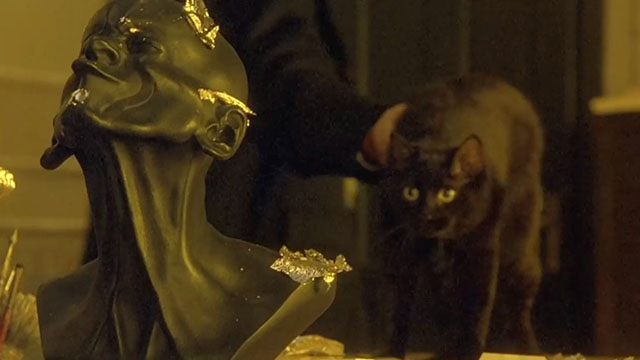
The black cat is seen again when Klimt is in his studio working with gold leaf. Midi enters and starts a conversation during which Klimt holds the cat and they are reflected in a glass table top, until Klimt places the cat on the table and the kitty walks off across it.
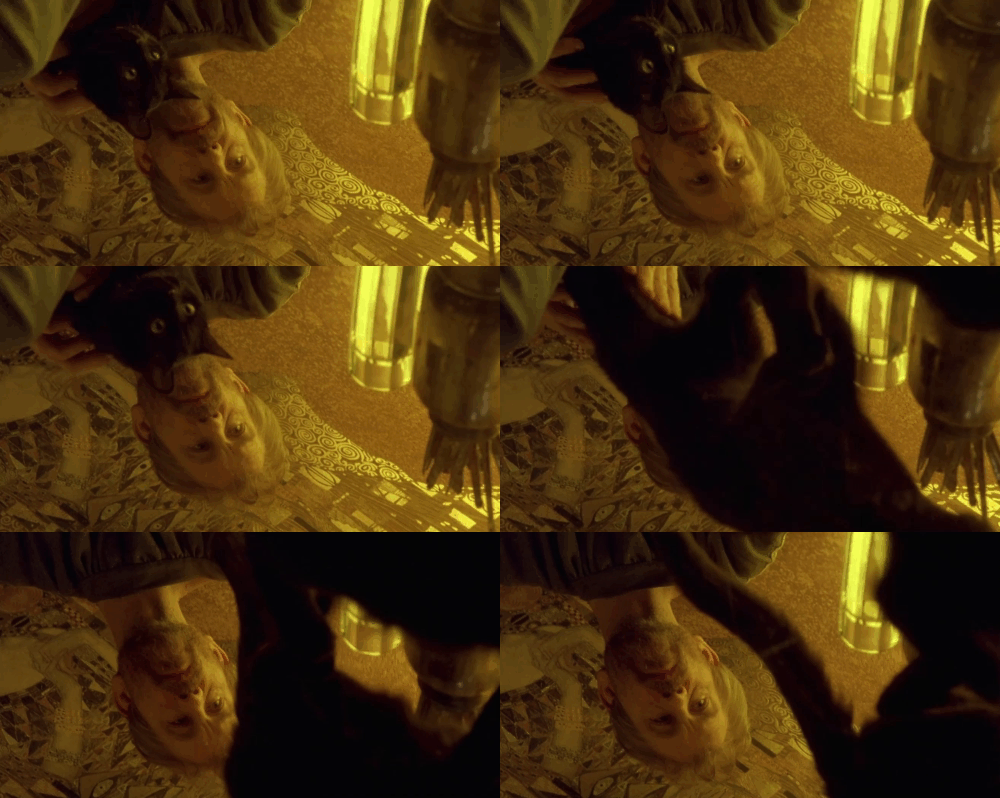
As she leaves, Midi deliberately slams the door to create a draught that sends the gold leaf flying around the room. As it settles Klimt calls to the cat which can be heard crying. The cries stop and Klimt turns to see the secretary (Stephen Dillane) in the doorway holding the cat.
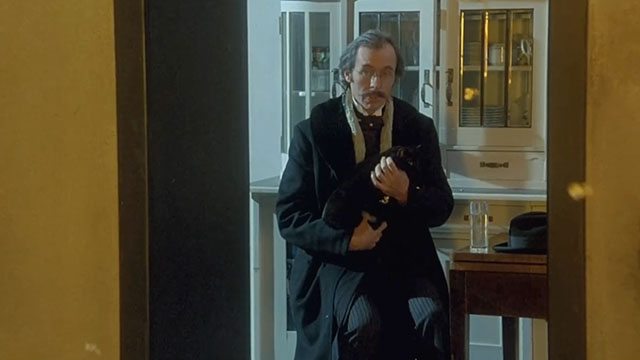
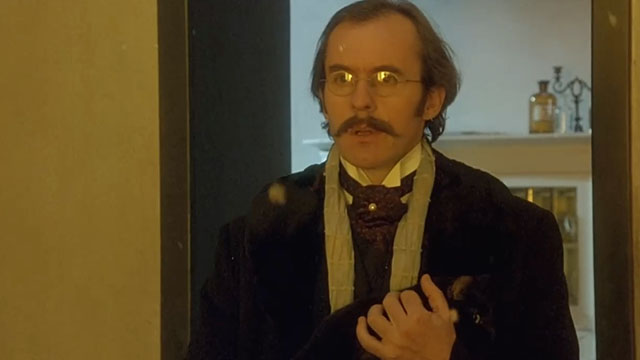
After a brief conversation with Klimt he plonks the cat on a table and leaves.
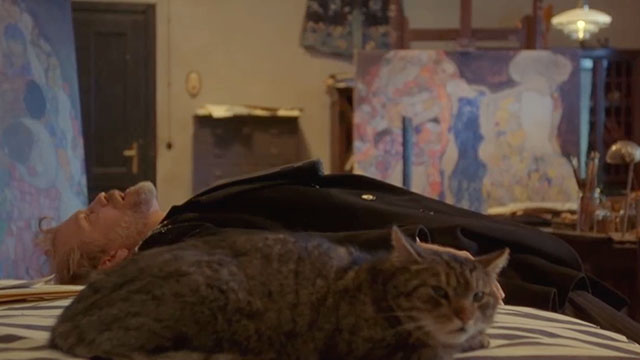
Kitty Cameos: The final cat scene is near the end of the film and the end of Klimt’s life when Klimt enters his studio (declaring “Death is all around us”) and various cat cries are heard before he sits on his bed and leans back to reveal a none-too-happy looking brown tabby cat also lying on the bed.
As Klimt rises and walks to the door a second cat can be partially seen further back on the bed.
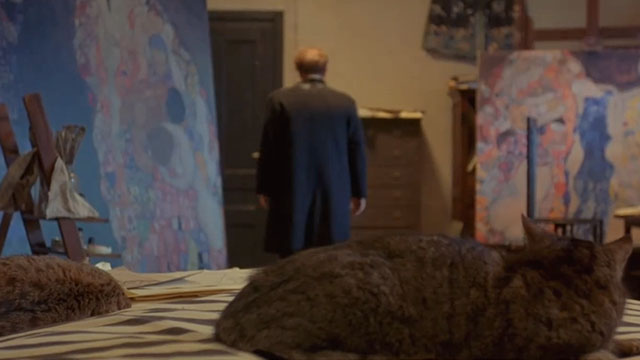
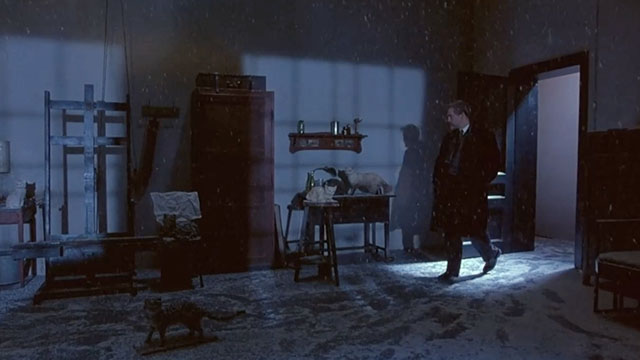
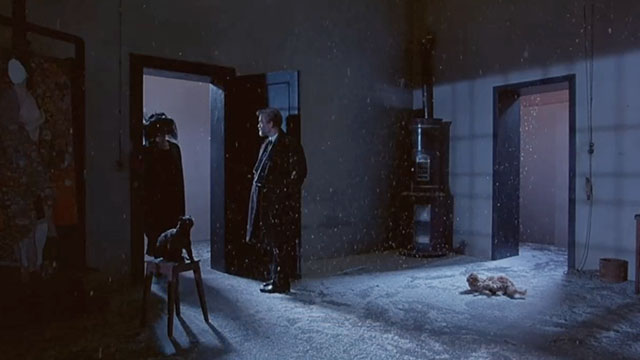
Faux Cats: Several cats feature in the next surreal scene but these all appear to be sculptures and stuffed or fake cats. The animals in the film were trained and supplied by Ingeborg Animals (aka Aurelia Hornung).
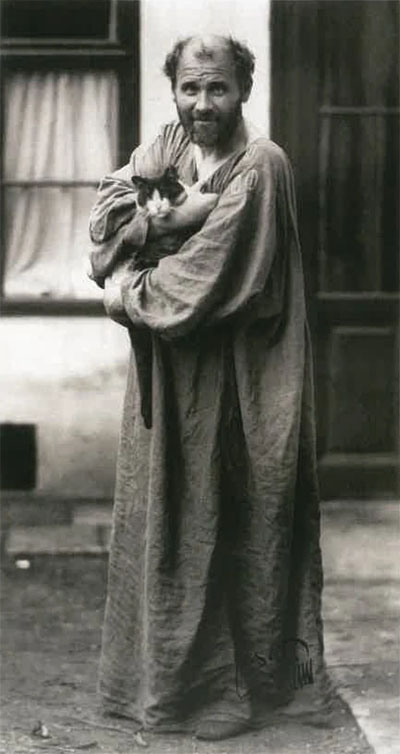
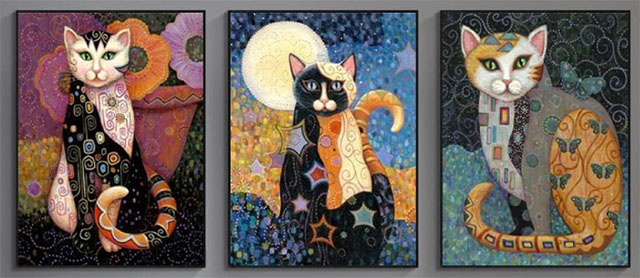
Klimt was indeed a cat lover (just as he did believe cat urine to be the best fixative) but incredibly he never included felines in his paintings. This did not stop other artists from creating cat paintings in Klimt’s style and these prints are very popular today.
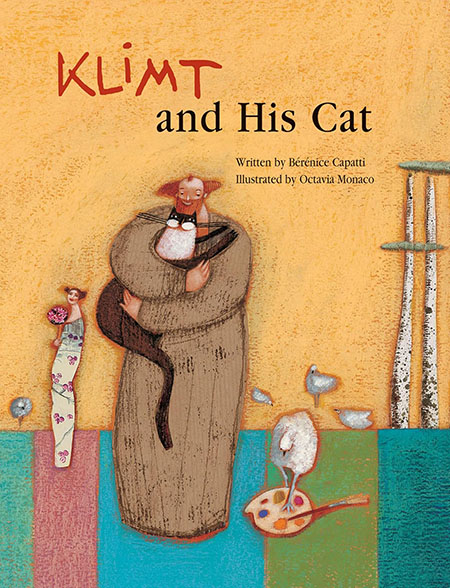
Klimt’s love of kitties also inspired the children’s book Klimt and His Cat, written by Bérénice Capatti and illustrated by Octavia Monaco, which tells the story of the artist through his cat Katze’s eyes.
Final Mewsings: Cats are mother nature’s finest work of art.
Relevant Links:


To discuss this film and other cats in movies and on television, join us on Facebook and X.